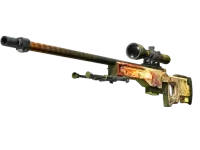
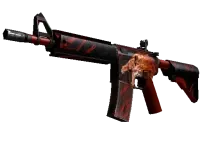
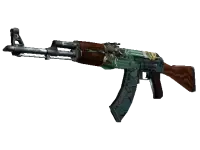
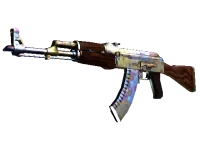
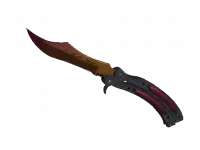
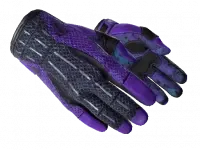

Understand what a skin description, case screen or Steam trade message actually means before you act. This glossary explains float, wear, StatTrak, trade holds, house edge and other terms, then connects them to FarmSkins’ documented CS2 cases, Upgrader and Steam item withdrawals. General CS2 and Steam explanations are labeled separately from FarmSkins rules. FarmSkins is not a cash-out marketplace: withdrawals are in-game items, not money. Its chance-based activities are for adults aged 21+ and carry a house edge; understanding the vocabulary does not make their outcomes predictable.
Find the term behind your question
Start with the question you need answered. A skin’s condition, its chance of appearing and its ability to move through Steam are separate issues. An attractive item can be temporarily untradable; a rare item can have a worn finish; a platform value is not a cash withdrawal quote. Keeping those distinctions clear prevents many avoidable misunderstandings.
| Term | Plain-English meaning | Do not confuse it with |
|---|---|---|
| Float | A numerical wear attribute associated with an eligible CS2 skin. | Its rarity tier or chance of dropping. |
| Wear | The exterior condition category shown in the item name. | Damage caused by using the weapon. |
| StatTrak | An item variant with an activity counter. | A gameplay advantage. |
| Pattern seed | A value that determines how an applicable finish is arranged. | A seed used to verify a random result. |
| Trade URL | A Steam link that lets someone address a trade offer to you. | Your password or a trade confirmation. |
| Trade hold | A Steam-controlled delay before delivery of traded items. | A website’s processing queue. |
| Loot table | The set of items a case can award. | A list proving equal chances for every item. |
| House edge | The statistical advantage built into a chance-based product. | A prediction of your next result. |
| Provably fair | A system for checking random results through a published verification method. | A promise that play is favourable. |
| Bullets | FarmSkins credits used in specified features. | Withdrawable money. |
Read a CS2 skin description correctly
The following are general CS2 item concepts, not special FarmSkins rules. FarmSkins’ terms describe support for CS2 skins; this does not establish support for Dota 2, Rust or TF2 items. When identifying an item, read its complete description rather than relying on a thumbnail. Weapon model, finish, exterior and special attributes can distinguish items that initially look alike.
Skin, finish and weapon model
A skin is a cosmetic appearance for an eligible game item. The weapon model identifies the underlying weapon, while the finish identifies its decorative treatment. Neither an expensive finish nor a sought-after exterior improves the weapon’s underlying combat performance. When comparing descriptions, first check that you are looking at the same weapon and finish. Similar artwork or a familiar colour scheme is not enough to establish that the items are equivalent.
Float and wear: related, but not interchangeable
Float is the numerical wear attribute of an eligible skin. Wear, also called exterior, is the broader condition label associated with that attribute. The familiar labels run from Factory New through Minimal Wear, Field-Tested and Well-Worn to Battle-Scarred. Not every finish is available across every condition. A lower float generally corresponds to a cleaner exterior, but the visible effect depends on the finish: scratches, fading and exposed surfaces do not appear identically on every design.
Using a skin in matches does not progressively wear it down. Its exterior is not a durability meter that decreases when you play. Also, a condition label describes a category rather than a unique appearance: skins in the same category can still differ visually. If appearance matters to your choice, use an available inspection view and read the item details. Do not assume a generic case image represents the exact exterior you will receive.
Rarity, pattern and paint seed
Rarity is an item’s classification, not its exterior condition. A high-rarity skin can be Battle-Scarred, while a lower-rarity skin can be Factory New. Rarity also does not, by itself, tell you an item’s probability inside a third-party case. Pattern describes the arrangement of an applicable finish. Its paint seed, often called a pattern seed, helps determine that arrangement. Some finishes show meaningful pattern differences; others are much less affected. A pattern identifier alone does not establish a premium or a particular valuation.
StatTrak, Souvenir and stickers
StatTrak identifies an item variant with a counter for eligible in-game activity, commonly kills on weapons. It does not make the weapon more powerful. Souvenir identifies a separate tournament-related item category; it is not another word for StatTrak or a wear grade. Stickers are cosmetic additions whose design, placement and condition can matter to collectors. An applied sticker should not automatically be valued as if it were a separate, unused sticker. These attributes help identify what you are viewing, but they do not establish what FarmSkins will award or how it will value an item.
Understand Steam offers and delivery restrictions
Inventory and trade offer
Inventory means a collection of items, but always ask which inventory is meant. An item displayed in a website account is not necessarily already present in your Steam inventory. A Steam trade offer is a proposed exchange showing the items on each side. Valve describes offers as prepackaged trades: you can inspect the proposed contents before accepting. For FarmSkins, withdrawal means requesting delivery through a Steam trade offer. It is the Steam offer and subsequent inventory status—not merely a website animation—that you should check when confirming receipt.
Trade URL, Steam OpenID and Steam Guard
A Trade URL is the Steam link used to address offers to your account. It is not a password, and providing it does not itself approve an exchange. Steam OpenID is an identity sign-in method: FarmSkins documents using it for login. In general, OpenID identifies your Steam account to the receiving website without making that website the place where you should disclose your Steam credentials. Check the actual destination whenever a sign-in window appears; a familiar logo is not proof of an authentic Steam page.
Steam Guard is Steam’s account-security system. Its Mobile Authenticator provides additional authentication for trade and market confirmations. This general security function is separate from any website’s delivery promise. FarmSkins’ FAQ specifically requires a saved Trade URL, a Public Steam profile and inventory, and Steam Guard active for 15 days before withdrawal. Treat those as FarmSkins’ published prerequisites, not as a complete explanation of every restriction Steam might display on a particular account.
Trade hold, trade lock and processing
A trade hold is a Steam-controlled period during which items are held before delivery. Valve explains its purpose as giving owners of compromised accounts an opportunity to cancel fraudulent trades. Trade lock is a broader community expression often used for an item or account that cannot currently trade. Processing, by contrast, can describe a website preparing a withdrawal before an offer exists. These labels are not interchangeable. A website support team cannot be assumed to control a Steam restriction, and an item’s tradability notice is more useful than an informal estimate.
- No Steam offer is visibleCheck the withdrawal status and saved Trade URL. Distinguish a request still being prepared from an offer that has already been sent.
- An offer exists but delivery is restrictedRead Steam’s exact message and any displayed eligibility date. Do not label every restriction a FarmSkins delay.
- The offer contents look wrongStop before accepting. Compare the item description, both sides of the exchange and the counterparty information rather than trusting an avatar or display name.
For account preparation and offer checks, continue to the Steam trading safety guide. For the platform’s withdrawal process, use the deposit and withdrawal guide. Keeping account restrictions separate from platform processing makes a support request easier to understand.
Separate item values from spendable money
| Term | Meaning in this context | Important boundary |
|---|---|---|
| FarmSkins Balance | Platform credits used for purchases and supported activities. | The terms say balance credits are not real money. |
| Bullets | FarmSkins credits used in specified cases and other features. | They have no cash value and cannot be transferred. |
| Crystals | Credits used for FarmSkins Pick’em predictions. | They have no cash value and cannot be transferred. |
| Steam Wallet funds | Funds used for purchases within Steam, including its Community Market. | FarmSkins does not accept Steam Wallet as a deposit method. |
| Item withdrawal | Delivery of an in-game item through a Steam trade offer. | FarmSkins does not offer cash withdrawals. |
Price, platform value, fees and liquidity
Price is what a particular transaction asks you to pay. Platform value is the figure a service assigns to an item for its own features or calculations. A Steam Community Market listing is another context again: Valve’s market uses Steam Wallet funds and displays transaction fee lines. These figures should not be substituted for each other. A skin shown with a particular platform value does not establish an available cash payment, and a listed asking price does not prove a completed sale.
Fee means a stated charge; spread generally means the difference between quoted buying and selling values. Liquidity describes how readily an item can be exchanged in a particular market, not how impressive its displayed price looks. These are general market terms, not evidence that FarmSkins offers a buy-and-sell service. Its terms prohibit third-party resale and real-money exchange. Use the fees and pricing guide to distinguish published platform conditions from assumptions based on unrelated marketplaces.
Deposit, withdrawal and cashback
Deposit describes adding funds or eligible value through a supported payment route. Withdrawal describes moving an eligible item out of the platform to Steam; it does not mean reversing the original payment. FarmSkins’ FAQ says a deposit is required before item withdrawal. Cashback also needs careful reading: FarmSkins documents 3% in Bullets on cases bought with Balance. That is a credit-based reward, not a return to your bank account. Receiving Bullets does not cancel the cost of opening a case or remove the house edge.
Read case odds without confusing chance and value
Case, loot table, drop and probability
A case is a chance-based product with a defined pool of possible outcomes. The loot table is that pool; a drop is the item awarded by an opening. FarmSkins’ terms describe virtual CS2 cases that award an item from a predefined loot table, paid for using Balance or Bullets where permitted. A third-party case should not be assumed to use the same contents or probabilities as an in-game Valve case simply because both use CS2 items.
Probability describes how likely a particular outcome is under the applicable rules. A contents list identifies possibilities, but it does not by itself establish their relative chances. The position or size of an item image is not an odds disclosure. Before spending, distinguish the case price, eligible contents and any probability information actually shown. If the information needed to understand an opening is unavailable, do not fill in the blanks with odds from a different case or service.
RNG, independence and the “due” result mistake
RNG means random number generator: a mechanism used to select a random result. The term alone says little about how a service implements or verifies that selection. In a system with independent outcomes, previous results do not change the next outcome’s probabilities. Believing that disappointing openings make a valuable drop “due” is the gambler’s fallacy. This is a general probability principle, not a claim about FarmSkins’ unpublished implementation. An animation that appears to stop near a desirable item also does not establish that a future opening has become more favourable.
House edge, RTP and expected value
House edge is the statistical advantage built into a chance-based product. It concerns the relationship between what participants commit and the expected value returned under the rules. It is not a fixed loss applied identically to every session. RTP, short for return to player, expresses the theoretical return relative to the amount committed across repeated play. It is not a personal repayment promise. For skin products, the valuation basis matters: a return expressed using platform item values is not automatically equivalent to withdrawable money.
Expected value is a probability-weighted average: each possible outcome contributes according to its chance of occurring. A meaningful calculation needs the relevant probabilities, outcome values and cost. Looking only at the most expensive possible drop cannot establish it. Volatility describes how widely results can vary, while variance is a mathematical measure of that spread. A product can produce occasional high-value outcomes and still have a house edge. Neither a recent favourable result nor a long disappointing sequence tells you what your next result will be.
Provably fair, seeds, hashes and nonces
Provably fair generally describes a published method for checking how a random outcome was derived. In a typical design, a server seed is secret input committed to in advance, a client seed supplies another input, and a nonce distinguishes successive outcomes. A hash acts as a cryptographic fingerprint that can help check whether the revealed input matches the earlier commitment. The exact algorithm and the mapping from its result to an item are essential; a hash displayed without a usable verification procedure does not explain the whole process.
A CS2 paint seed and a provably-fair seed solve unrelated problems: the former concerns an item’s appearance, while the latter can be an input to result generation. For a fuller explanation of the distinction between randomness and verification, read the provably-fair guide.
Translate FarmSkins feature names into actions
| Feature | Documented meaning | What to check |
|---|---|---|
| Ultimate Mode | An optional setting on some cases that may shrink the item pool, lower the price and increase Bullet accrual. | The selected mode’s current contents and price, not the standard case alone. |
| Farm Zone / Farmzone | Competitive opening of identical cases, with items allocated according to the battle rules. | The match’s scoring and award rules before joining. |
| Upgrader | Input items, optionally with Bullets, are committed toward a higher-value target skin. | The target and attempt conditions; a failed attempt returns a skin of unspecified value. |
| Skin Changer | An inventory skin is swapped for another, with value differences paid or refunded in Bullets. | The replacement item and the direction of the Bullet adjustment. |
| Gaben’s Store | A store accepting Bullets for cases, skins and balance cards. | The selected product rather than assuming every purchase delivers a skin. |
| Warehouse | A feature exchanging Bullets for a random skin. | The distinction between a random result and choosing a known item. |
| Pick’em | Esports tournament predictions using Crystals. | The prediction rules; Crystals are not cash. |
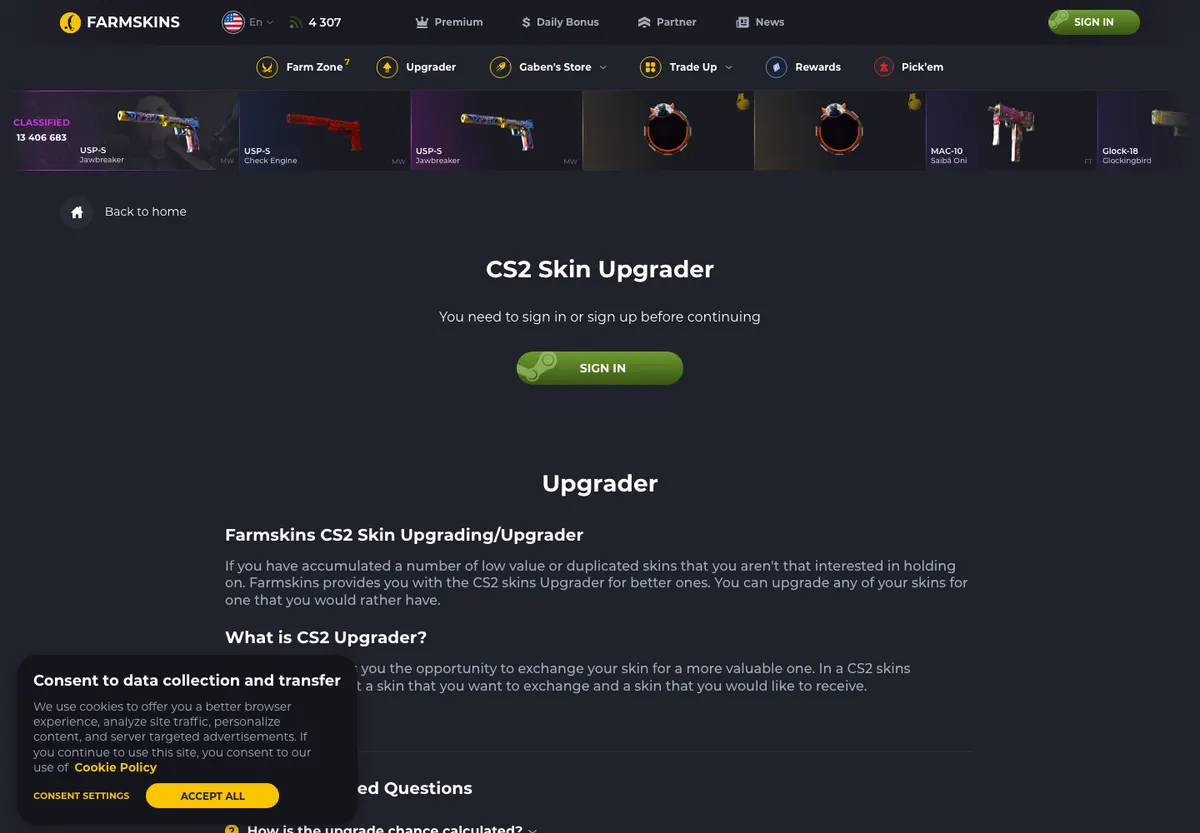
Upgrade is a feature name, not a promise that your committed item will become the selected target. FarmSkins’ terms say a failed Upgrader attempt still yields a skin, but do not establish that this replacement preserves the input’s value. Likewise, an exchange feature and a random-result feature answer different needs. If your goal is a particular appearance, distinguish choosing a named replacement from accepting whatever a random mechanism awards.
Farm Zone needs an additional distinction. The terms describe the highest total platform-valued result winning all items, while the battle page describes awards based on the most valuable skin in each round. Those descriptions should not be silently treated as identical. Check the applicable match rules before joining. A round is an individual case opening within the match; a total is an aggregate across the relevant results. Competing against other participants does not remove the chance element or house edge.
Use the game modes guide when comparing these activities, or the case-opening guide when your question concerns a case’s contents and opening process. A glossary defines the labels; the current feature rules determine what an action commits.
Recognise verification and security language
KYC means know your customer: checks intended to establish a customer’s identity. AML means anti-money laundering: controls addressing illicit funds and related risks. Neither term means that Steam sign-in alone completes every possible verification requirement. FarmSkins documents third-party verification through Sum and Substance for suspicious activity, high-risk jurisdictions and certain transactions. Its policy says the company does not store identity documents. This does not mean no verification can be requested, or that a payment and an item withdrawal necessarily involve identical checks.
Phishing means impersonating a trusted service to obtain credentials or approvals. Bot impersonation means presenting an account as an expected automated trading counterparty. These are general security risks, not claims about a particular FarmSkins incident. Names, avatars and chat messages can be copied; assess the actual offer and destination. A person calling themselves support should not persuade you to disclose authentication codes or approve an unrelated exchange. If something appears inconsistent, stop and use a documented contact route from the support guide.
Apply the glossary to your next decision
- If you are identifying a skinRead the weapon and finish first, then exterior, StatTrak or Souvenir status, and any relevant pattern or sticker information. Separate what is explicitly specified from what a thumbnail merely suggests. If an exact attribute matters to you, do not substitute a broader category for that attribute.
- If you are considering a chance-based actionIdentify what you commit, what can be awarded and how the result is determined. Distinguish a contents list from probabilities and a platform valuation from money. Set an affordable entertainment limit beforehand; uncertainty is a reason to pause, not to increase spending.
- If you are trying to receive an itemConfirm the destination Steam account, saved Trade URL and published withdrawal prerequisites. Then determine whether the request is processing, an offer is pending, or Steam is showing a restriction. Record the exact status rather than describing every problem as a missing skin.
- If you need helpPrepare the relevant transaction or offer reference, the item description, the exact error text and a screenshot with sensitive details hidden. Explain which stage failed. Do not send passwords, recovery information or authentication codes to make the request seem more complete.
Common glossary questions
No matching questions found.
Does a lower float mean a rarer drop?
Will my skin become Battle-Scarred if I keep using it?
Are Bullets the same as a withdrawable balance?
Does getting an item from a failed upgrade mean I preserved my value?
Is provably fair the same as having no house edge?
Is a Steam trade hold a FarmSkins withdrawal fee?
Check the meaning before you confirm
- Identify the exact item attributes, not just the artwork.
- Separate case contents from probabilities and platform values from money.
- Know whether an action selects a known item or produces a random result.
- Read the applicable feature rules and Steam status before confirming.
- Keep chance-based spending within an affordable entertainment budget and stop if you feel pressure to recover losses.
If your goal is to understand the full account-to-withdrawal sequence, follow how FarmSkins works. If spending feels difficult to control, prioritize the responsible gambling guide rather than another opening. These activities are for adults aged 21+ where lawful, and their house edge remains regardless of how familiar the terminology becomes.
Review current case contents and feature rules on the official site before deciding whether to participate.
Links to the official site are independent and earn no commission. →
This independent guide is for informational purposes and is not affiliated with Farmskins.